Knowledge Hub
-
04/02/2024
Evaluating a Movement-Based Mental Health Promotion Intervention for Refugee Children in Uganda: A Quasi Experimental Study
Mental health promotion interventions are widely implemented in humanitarian settings and low- and middle-income contexts (LMICs), yet evidence on effectiveness is scarce and mixed. This study evaluated the movement-based mental health promotion intervention “TeamUp” in Bidibidi refugee settlement, in Northern Uganda. A quasi-experimental study including four schools (two per arm) assessed the outcomes of 10- to 15-year-old South Sudanese and Ugandan children. Randomly allocated, they either participated in up to 11 TeamUp sessions provided by trained facilitators; or belonged to a control group, which continued care as usual. Primary outcomes measured psychosocial wellbeing, friendships and attitude to school; secondary outcomes included traumatic distress, depressive symptoms, quality of life, physical health, bullying, interoceptive awareness, and irritability. Children saw significant improvements in both primary and secondary outcomes. This shows promising results for the intervention, though more research is needed to assess its effectiveness.
Read more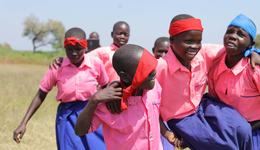
-
04/25/2025
Follow-up and Mediation Outcomes of a Movement-Based Mental Health Promotion Intervention for Refugee Children in Uganda
There is limited evidence for the effectiveness of mental health promotion interventions in low- and middle-income settings, especially for longer-term benefits. This study evaluates the 5-month follow-up outcomes of a movement-based mental health promotion intervention (TeamUp) for refugee children in Northern Uganda (West Nile) and further investigates what explains longer-term benefits.
Read more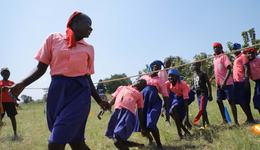
-
04/11/2024
Nurturing families: A feasibility randomised controlled trial of a whole-family intervention with vulnerable families in Jordan
Armed conflict and forced displacement can significantly strain nurturing family environments, which are essential for child well-being. Yet, limited evidence exists on the effectiveness of family-systemic interventions in these contexts. This study conducted a two-arm, single-masked, feasibility Randomised Controlled Trial (fRCT) of a whole-family intervention with Syrian, Iraqi and Jordanian families in Jordan. Here, it aimed to determine the feasibility of intervention and study procedures to inform a fully-powered RCT. Of the 62 families screened, 60 (98%) were eligible, 97% completed the baseline and 90% completed the endline. Qualitative feedback indicated specific improvements in adolescent well-being, caregiver distress and parenting, and family relationships. Findings indicate the acceptability and feasibility of intervention and study procedures, but subsequent full-scale evaluation is needed to determine effectiveness.
Read more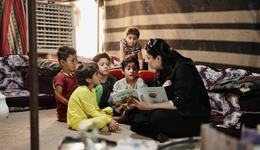
-
05/30/2024
Health system responsiveness to the mental health needs of Syrian refugees: mixed-methods rapid appraisals in eight host countries in Europe and the Middle East
Syrian refugees have a high burden of mental health symptoms and face challenges in accessing mental health and psychosocial support (MHPSS). This study assessed health system responsiveness (HSR) to the MHPSS needs of Syrian refugees, comparing countries in Europe and the Middle East to inform recommendations for strengthening MHPSS systems. To do so, it used a mixed-methods rapid appraisal methodology guided by an adapted WHO Health System Framework was used to assess HSR in eight countries (Egypt, Germany, Jordan, Lebanon, Netherlands, Sweden, Switzerland, and Türkiye). Overall, it finds all eight host countries struggle to provide responsive MHPSS to Syrian refugees. Strengthening the mental health workforce (in terms of quantity, quality, diversity, and distribution) is therefore urgently needed to enable Syrian refugees to receive culturally appropriate and timely care and improve mental health outcomes.
Read more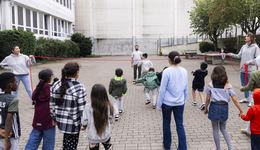
-
03/01/2023
Feasibility randomised controlled trial of the Early Adolescent Skills for Emotions psychological intervention with young adolescents in Lebanon
Globally, there is a vast mental health treatment gap, whereby the majority of adolescents living in low- and middle-income countries requiring mental health services, do not have access to adequate care. To improve access, the World Health Organization (WHO) developed a range of interventions, designed to be low-cost and delivered by non-specialists. This study conducted a two-arm, individually randomised group treatment feasibility trial of a new WHO group intervention for young adolescents with emotional distress (‘Early Adolescent Skills for Emotions’; EASE) in Lebanon. The aim was to determine the feasibility of the intervention and study procedures.
Read more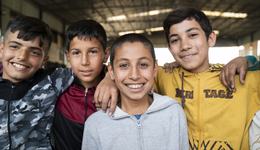
-
05/30/2024
Validation of Arabic versions of the child psychosocial distress screener and pediatric symptom checklist for young adolescents living in vulnerable communities in Lebanon
In humanitarian settings, brief screening instruments for child psychological distress have potential to assist in assessing prevalence, monitoring outcomes, and identifying children and adolescents in most need of scarce resources, given few mental health professionals for diagnostic services. Yet, there are few validated screening tools available, particularly in Arabic. This study translated and adapted the Child Psychosocial Distress Screener (CPDS) and the Pediatric Symptom Checklist (PSC) and conducted a validation study with 85 adolescents (aged 10–15) in Lebanon. Overall, it finds the Arabic PSC and CPDS are reliable and valid instruments for use as primary screening tools in Lebanon. Further research is needed to understand discrepancies between adolescent and caregiver reports, and optimal methods of using multiple informants.
Read more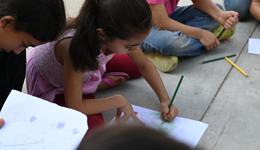
-
10/01/2025
Protocol for a mixed-methods effectiveness evaluation of the community-led child protection approach (Seeds) in La Guajira, Colombia
Globally, an estimated one billion children experience violence every year. The prevalence of violence is anticipated to be higher in low-and middle-income countries and particularly in humanitarian contexts. Colombia faces a protracted humanitarian crisis. It is affected by long-lasting internal conflict, high levels of community violence, the climate crisis, and migration due to the political crisis in Venezuela. The aim of this mixed-methods study is to evaluate the effectiveness of a community-led child protection approach (Seeds) in La Guajira, Colombia.
Read more